
Going Home

The word home conjures up a lot of emotions for people. We may find ourselves first reflecting on the place where we currently live and the people with whom we share that space. Hopefully, most of us associate home with a place of love and comfort and security. The place where we want to retreat when the world outside gets too hard, too loud, or too scary. Whatever form it takes, home is most often associated with a time to rest and to reset in order to face the future.
Just as we return to home on a daily basis, sometimes, when we’re in times of crisis or at a crossroads in our lives, we find ourselves longing to return to the places we called home earlier in our lives… the places that helped define who we are and how we see the world.
I was already in my 40s when I responded to God’s call on my life to pastoral ministry. The prospect was fairly overwhelming and, while I diligently went through the steps, I was in no rush. More than one person commented on my apparent reluctance to embrace this new direction in my life.
Amazingly, God used the concept of home to reinforce for me that this call was authentic, and it was something that God had been preparing me for all my life. This realization was more than just surprising, because as an Army brat with more than 25 lifetime moves under my belt, I have never associated home with a physical space.
Nevertheless, I found myself coming home over and over in my journey to accepting this call. First, there was the church I was attending and where I was currently active in ministry. It was because of the people and the teaching and the service I was part of that helped me realize that God had set me apart for something different.
One step in the process was to attend a presentation on the different types of ministry to which I may be called. The drive took me past the town where I had first dedicated my life to Jesus and had first been encouraged to preach as a lay speaker. The church hosting the event was led by a pastor who, many years earlier, had recruited me to take part in leading worship on a regular basis for two small churches in our county.
Over and over as I was stepping forward into a future of which I was unsure, God kept bringing me home to places and people in my past who had been instrumental in setting the foundation of my faith and my call to serve.
Saul would never have been considered a candidate for an apostle of Jesus Christ. After all, he stood by and held the cloaks of those who stoned Stephen for proclaiming Jesus as the Messiah (Acts 7:58; 8:1). He led the persecution of the church “dragging off both men and women” (Acts 8:2) and committing them to prison. He even sought permission from the high priest to go to Damascus in order to seek out those who followed Jesus (Acts 9:1-2). By all measures, he would never have been predicted to spread the gospel to anyone, much less an audience across most of the Roman Empire.
In Acts 9, we learn of his dramatic conversion – not just as a believer, but – to being a powerful and effective evangelist who confounded the Jews and offered proof that Jesus was the Messiah (verse 22). But this dramatic and somewhat alarming reversal put him in danger from those who once were his teachers and closest colleagues and friends.
In the midst of this tumultuous time, when everything in his life had been turned upside down, the believers sent him home to Tarsus (Acts 9:30).
We don’t know a lot about his time there, but I have to wonder if he didn’t reflect on how God had used his experiences growing up there had formed him for the ultimate work he was to achieve on behalf of God’s Son.
Tarsus was the capital city of Cilicia, a region in southeastern Asia Minor, and only 12 miles from the Mediterranean Sea. As a self-professed Pharisee (including Acts 23:6) who grew up in this Roman city, he no doubt recalled the community of diaspora Jews who nurtured him in his faith even though surrounded by a multitude of temples dedicated to the pagan Gods of Rome.
Yet, he was also a Roman citizen (which Paul mentions in Acts 21:39), and growing up in a Roman city, he understood the culture and lifestyles he would encounter someday on his journeys throughout Asia Minor and Greece and eventually to the heart of the empire – Rome itself.
The Greek geographer Strabo described the enthusiasm for education that was held by the elite who lived in Tarsus. In fact, the city boasted one of the three great universities of the ancient world. Saul, too, was well educated and able to match those with whom he shared the gospel in philosophy and rhetoric.
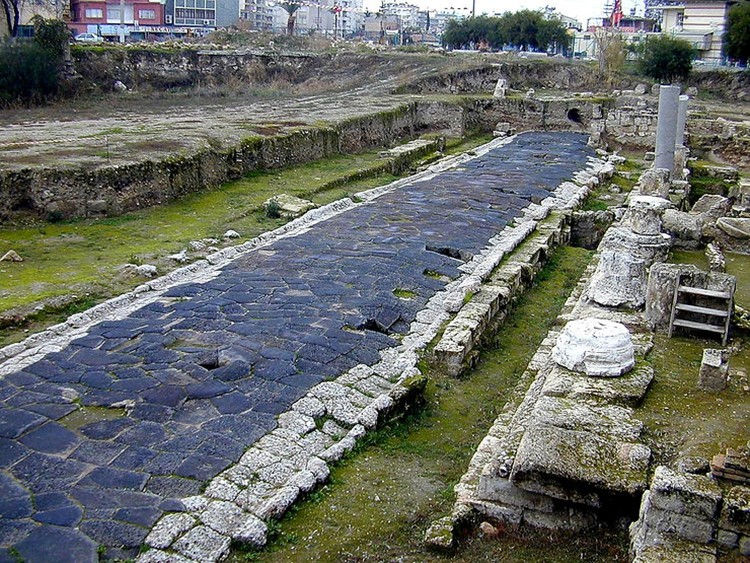
Today, much of the wonder of that once wealthy and revered city remains buried under the structures that its modern day citizens call home. But even if we cannot see the streets Paul once walked nor visit the places where he lived and studied and worked, we can imagine their meaning to him just as the places that have had a part in forming who we are mean to us.
We are a product of the people with whom and places where we have lived. We have been shaped by our experiences, and God has a plan for how to use those parts of our lives in the service we’ve been called to live out for God’s glory.
When you reflect on your own home, whether the one that you recall from your childhood or the other places that formed you – what lessons did you learn there? Who are you today because of where you lived then? And how can God use those parts of you in the days and years to come?



Comments